
Intent
Drayton Infant School’s maths curriculum is coherently planned and sequenced towards cumulatively sufficient knowledge and skills, future learning and employment. Our mathematics curriculum equips pupils with tools that include logical reasoning, problem-solving skills, and the ability to make connections and think in abstract ways. We foster a love and enjoyment of maths in all our pupils, and a `can do’ attitude.
Implementation
Drayton Community Infant School uses a mastery approach for maths based on the 5 big ideas – coherence, mathematical thinking, fluency, variation, and representation and structure.
During the Early Years Foundation Stage Curriculum, maths forms part of many interactive learning experiences. Pupils develop their knowledge and understanding of mathematics through play, exploration and discussion. Children work with shapes and begin to learn their properties, use language to give positional clues and compare quantities, and identify and recreate patterns. They learn to count, read, write and order numbers to 20 using songs and rhymes, which is extended to 100 and beyond during The National Curriculum in Key Stage 1. Our EYFS scheme of work ensures full coverage and progression of knowledge and skills expected by the end of Reception. The NCETM Mastering Number programme forms the basis of the teaching of number and numerical patterns. Teaching of pattern, shape, space and measures uses NCETM plans and Oak academy.
Schemes of work for Year 1 and 2 are planned from the National curriculum objectives by the maths lead. These schemes of work ensure coverage and progression of the objectives within and across the year groups. Key vocabulary and representations to be used are explicit on the schemes of work.
Short term plans make use of NCETM, White Rose and Oak academy
In Key Stage 1, the focus of maths teaching is on the three aims of the National Curriculum to enable the children to make connections in their learning and demonstrate mastery of their maths skills and knowledge.
Fluency: 10 minutes of each day is spent practising concepts learnt so far and making connections between them. This may include mental calculations, times tables or shape games. We follow the NCETM mastering number programme which forms the majority of the fluency sessions.
Problem solving: Problem solving activities are planned for all key objectives. This may include word problems, visualisation problems, logic problems or finding all possibilities.
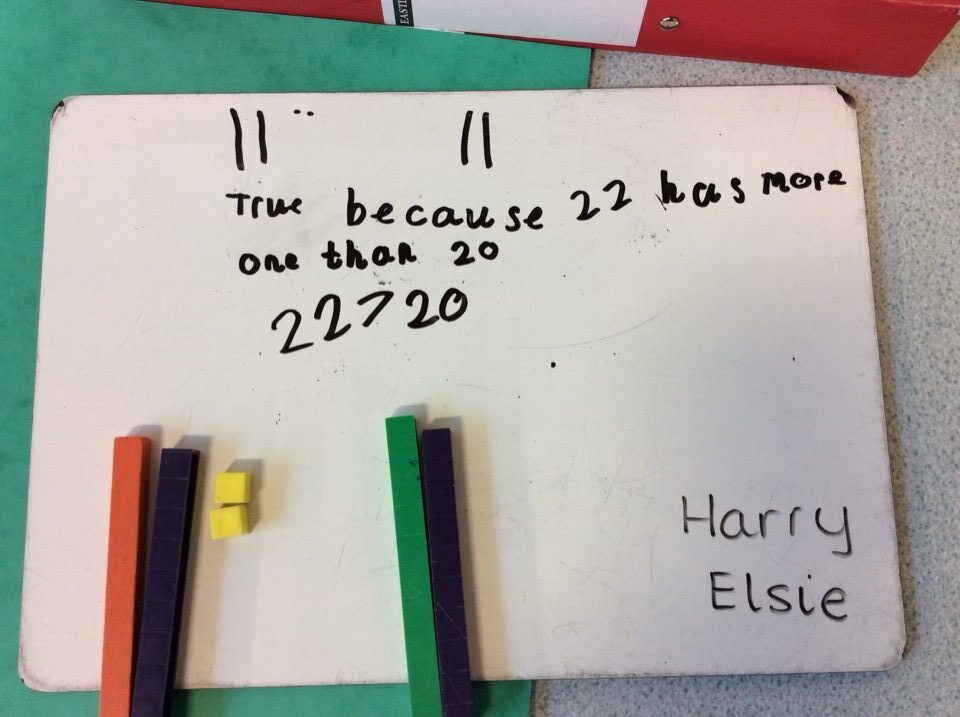
Reasoning: Children are encouraged to explain their `working out’ and reasoning in all maths activities. They answer questions such as `what do you notice?’, what’s the same ordifferent?, `how do you know?’ and are encouraged to prove answers and convince others.
Children are taught maths in Key Stage 1 through daily discreet 1 hour maths sessions. Cross curricular links are also made with other subjects, especially science, DT, ICT and PE.
In Key Stage 1 we do not have set ability groups. We have high expectations of all children and it is recognised that children may not always be at the same ability for every mathematical concept. Scaffolding through use of concrete resources and representations helps children who need extra support with concepts, alongside pre-teaching and revisiting of concepts outside the lesson. Learning is extended by focusing on children’s reasoning and problem solving skills. Children often work in pairs to support understanding and use of key vocabulary.
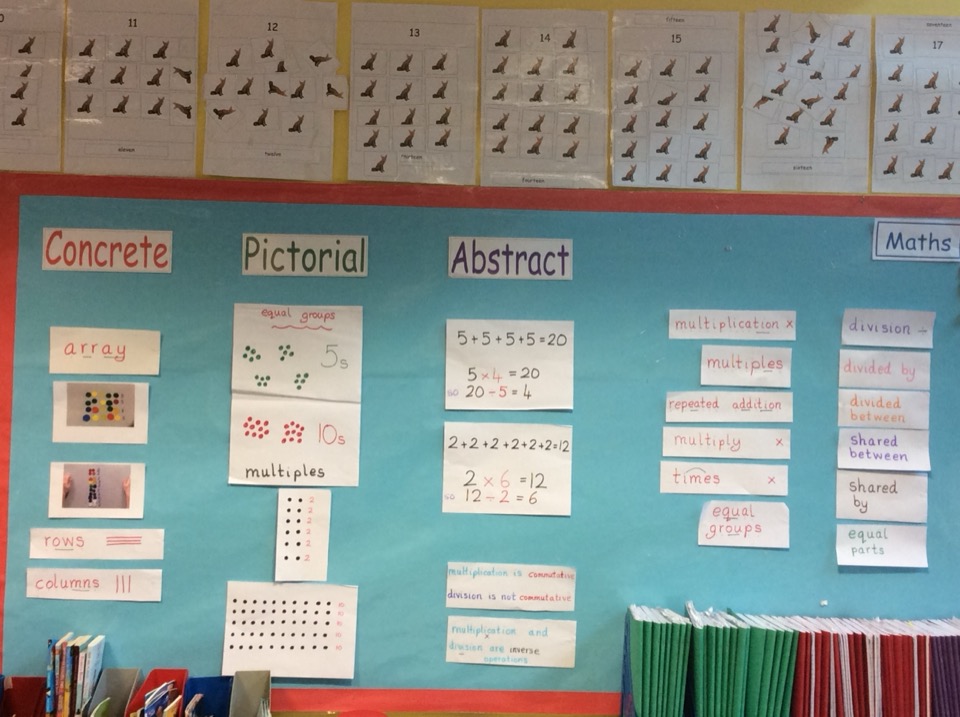
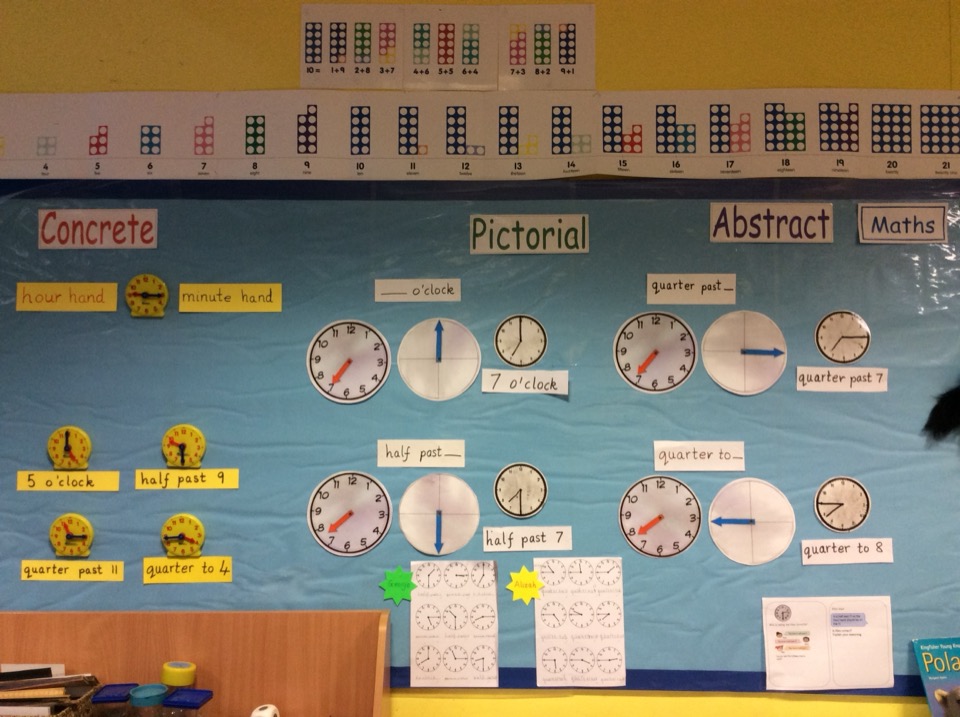
At Drayton Infants we teach maths using the CPA approach:
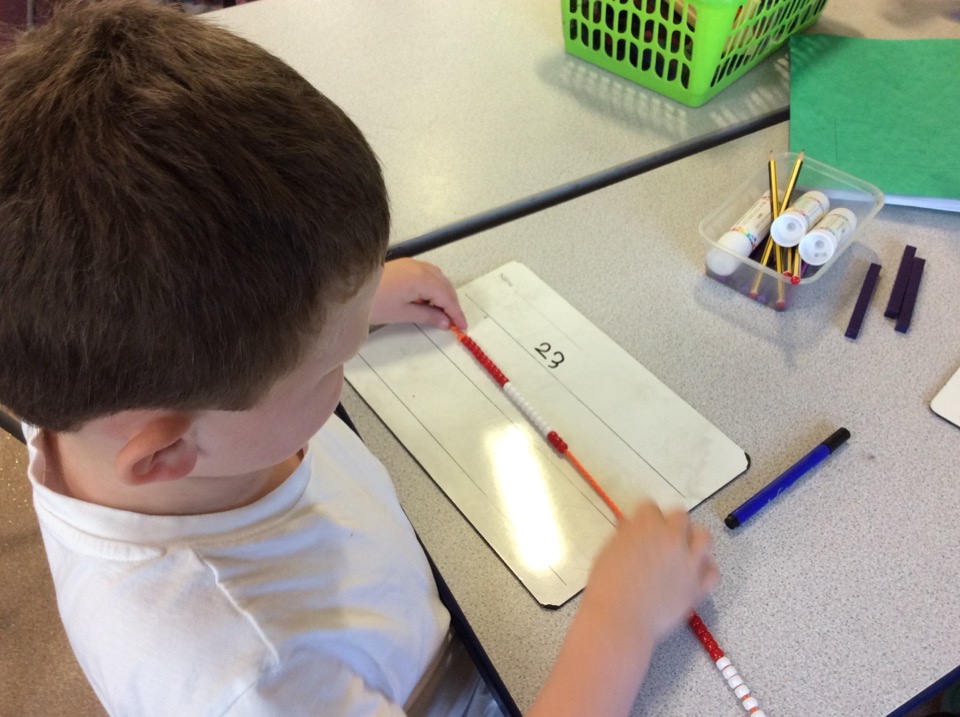
Concrete – Children experience and handle physical (concrete) objects.
Pictorial – Visual representations of concrete objects are used as a bridge between the concrete and the abstract.
Abstract – Children use numbers and symbols.
Children move between these stages as they learn new concepts, or to reinforce their understanding of concepts.
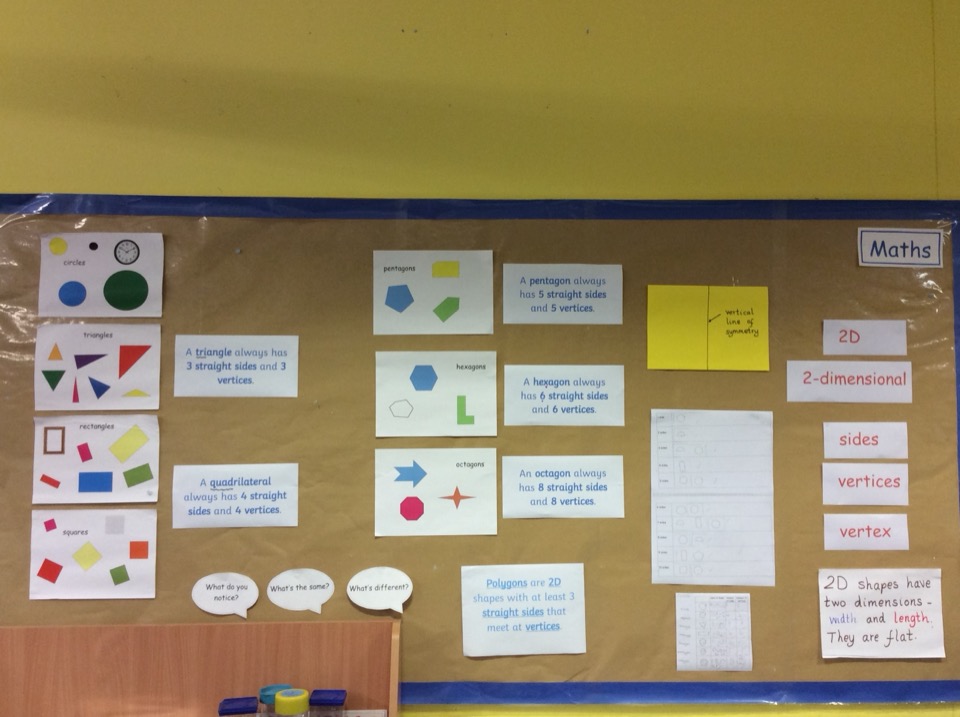
Working walls are changed weekly with modelled examples using the CPA approach.
Impact
Standards in mathematics at Drayton Infants are high. Children attain higher than the national average at the end of EYFS. They also exceed National expectations at the end of Key Stage 1.
Maths assessment is ongoing to inform teachers with their planning, lesson activities and differentiation. Children in KS1 may complete independent prior learning tasks before a unit of work is planned to establish a current starting pint. Summative assessments are completed at the end of each half term to inform teachers of the knowledge, methods or skills that still need to be embedded.
Maths is monitored throughout all year groups using a variety of strategies such as book scrutinies, lesson observations, learning walks, data analyses and pupil voice. Monitoring is undertaken by the maths lead and SLT. Timely feedback is given to all teachers and the SLT. Findings from monitoring informs action planning and future monitoring priorities.
Pupil voice questionnaires show that children enjoy maths. All children asked say that they feel `happy’ and `good’ about maths and that `it is fun’. They talk about how their teachers help them, what they are trying to get better at, and how they know if they have been successful in their learning. They make use of maths working walls to support their independent learning. Children are happy to show their maths work in their books and displayed in classrooms and take pride in it.
As children leave the school at the end of year 2, parents report that their children have developed a `true love of maths’ and have `really fallen in love with maths’. Children begin the next stage in their school life feeling confident and enthusiastic about maths.